For decades, the fitness industry has been obsessed with weight and the BMI index. However, as our understanding of the human body grows, so do the metrics we use. Today, smart training is an investment in longevity, and one of the most important indicators of your health is not your total body weight, but where your body stores fat.
Meet the Waist-to-Hip Ratio (WHR). Whether you're just reading your first fitness tips for beginners or are an experienced athlete, understanding your WHR is a complete game-changer.
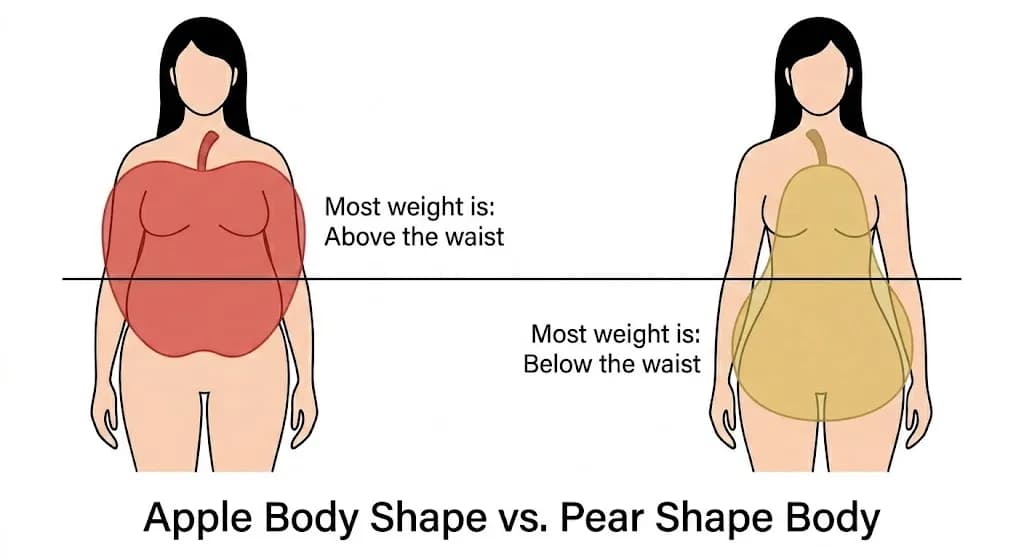
What is WHR and how to measure it correctly?
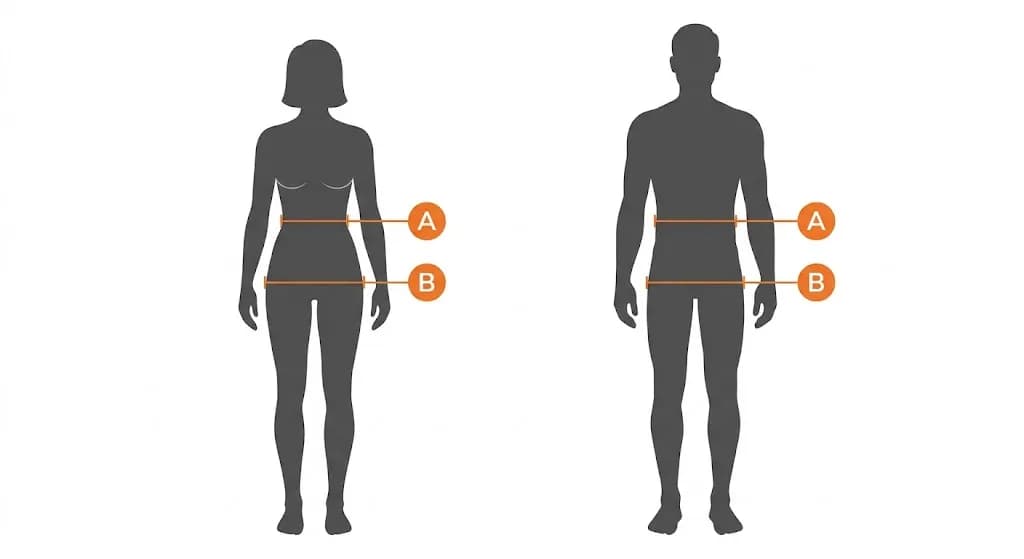
WHR is a dimensionless ratio of your waist circumference to your hip circumference. It shows how body fat is distributed in your body. To calculate it, simply divide your waist measurement by your hip measurement:
WHR = Waist / Hips
For example, a person with a 75 cm waist and 95 cm hips has a WHR of approximately 0.79.
Measurement guidelines according to the World Health Organization (WHO): According to the WHO protocol, waist circumference should be measured halfway between the lower margin of the last palpable ribs and the top of the iliac crest, using a stretch-resistant tape under a constant tension of 100 g. Hip circumference should be measured around the widest part of the buttocks, with the tape parallel to the floor.
Practical tip: The US National Institutes of Health (NIH) recommends measuring the waist at the level of the upper edge of the iliac crest, while for obese individuals or pregnant women, the measurement is often taken about 2.5 cm above the navel.
Hard data: Why WHR is more effective than BMI
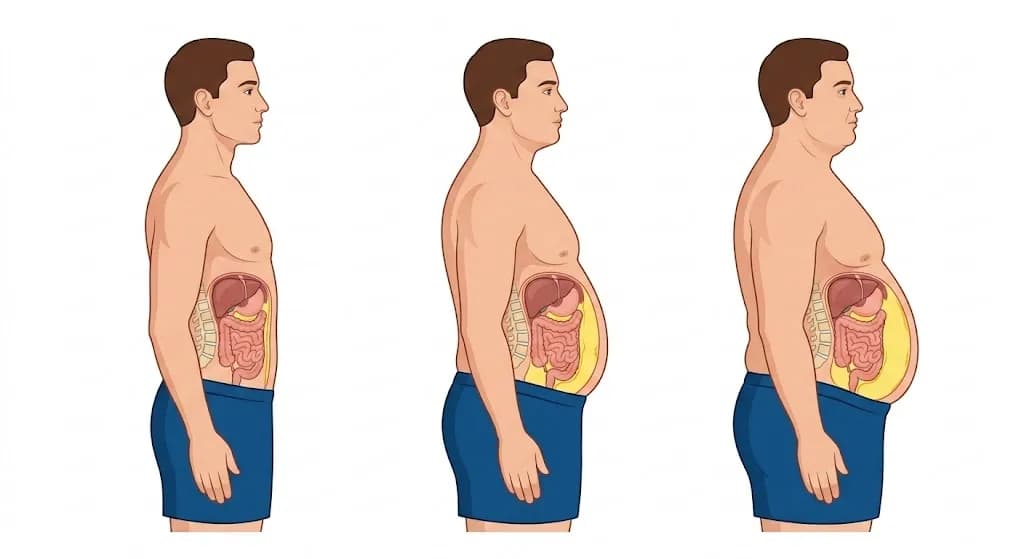
Why has WHR become the new gold standard in medicine? Because two people can have the exact same BMI, but completely different body compositions. Fat accumulating on the belly is much more dangerous than fat located on the hips.
- Health guidelines: WHO defines abdominal obesity as a WHR above 0.90 for men and 0.85 for women.
- Longevity: Studies show that in older adults (over 75 years of age), WHR is a more effective predictor of mortality than waist circumference or BMI.
- Heart disease: A global study conducted in 52 countries on 27,000 participants found that if we redefine obesity using WHR instead of BMI, the percentage of individuals classified as at risk of heart attack worldwide triples.
Stress, cortisol, and your waistline
If you've noticed your waistline expanding during stressful periods, it's pure biology. Cortisol (the stress hormone) is regulated by the hypothalamic-pituitary-adrenal (HPA) axis. Visceral (abdominal) fat has greater blood flow and more cortisol receptors than peripheral fat.
Women who have a normal BMI but a high WHR show elevated cortisol reactivity to acute stressors. This means that chronic stress directly stimulates fat cells on the belly to enlarge. Evidence for this link comes, among others, from studies on Cushing's syndrome.
Fertility, child development, and health
WHR is a highly accurate indicator of endocrinological and reproductive status.
- Fertility: Women with a high WHR (0.80 or more) have significantly lower pregnancy rates than women with a lower WHR (0.70–0.79). A Dutch study on artificial insemination found that an increase in WHR of just 0.1 units reduces the probability of conception in a single cycle by 30%.
- Menopause: As estrogen production drops during menopause, female fat distribution shifts from a gynoid (hips/thighs) to an android (belly) type, resulting in an increased WHR.
- Child development: Research by scientists at the University of Pittsburgh has shown that children's scores in cognitive tests correlate with their mothers' WHR. Fat on the hips contains long-chain polyunsaturated fatty acids, crucial for fetal brain development.
Attractiveness from the perspective of evolutionary psychology
Evolutionary psychologist Devendra Singh proved in 1993 that WHR is a strong subconscious signal of health and attractiveness. For women, the optimal and globally (especially in Western cultures) most attractive WHR ratio is 0.7.
Eye-tracking studies have repeatedly shown that men rating photos always chose women with a WHR of 0.7 as the most attractive – regardless of their bust size. Interestingly, for men, WHR is not as crucial – the waist-to-chest ratio plays a bigger role.

Genetics and eating – what can you change?
Twin studies suggest that between 22% and 61% of WHR variation may be genetically determined. However, diet plays a gigantic role. The American 'Baltimore Longitudinal Study of Aging' found that people consuming a lot of white bread had an annual increase in waist circumference over 3 times greater than those on a diet rich in fruits, vegetables, low-fat dairy, and whole grains.
Take control of your body
Choosing the right place, such as Elite Club gym, provides the optimal environment to work on reducing body fat.
Instead of guessing, consult a professional. Our personal trainer in Marbella will help you put together a nutrition program and customized personal training based on metabolic health principles. Achieving the perfect WHR is not about starving yourself, but about an intelligent combination of exercise, diet, and stress reduction.
Optimize your health and physique
Want to focus on the metrics that truly govern your health? Book a session with our trainer at Elite Club and start your transformation.